ANTHBOT N8: A robotic lawn mower that mows, mulches, collects grass clippings, and clears leaves
Robotic lawn mowers take the hard work out of mowing, but they rarely handle the cleanup. Most models rely exclusively on mulching, cutting the grass and leaving the clippings on the lawn. During the growing season, this can result in patches of damp grass, while fallen leaves add to the mess in the fall. Under a thick layer of clippings and leaves, the lawn receives less light, creating conditions in which moss and fungal diseases can develop. Anyone who wants to keep the lawn tidy may still need to reach for a rake or pay a lawn care service to do the job.
ANTHBOT
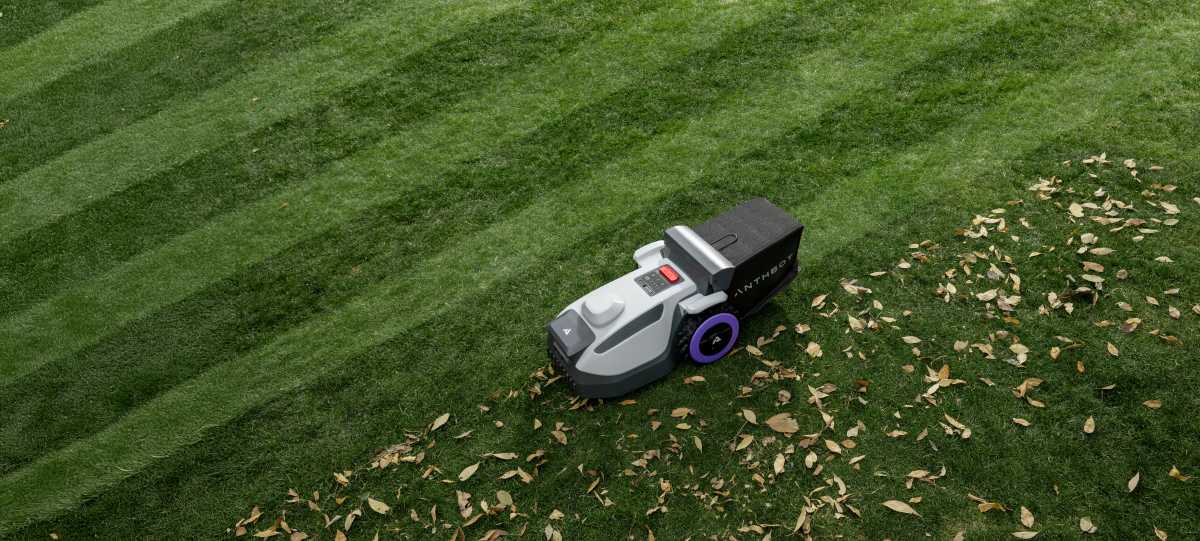
With the ANTHBOT N8, the job doesn’t end when the mowing is finished. The robot can also collect the clippings left behind.
Four tasks, one robot
The N8 is designed as a 4-in-1 system that can mow, mulch, collect grass clippings, and remove leaves. This is made possible by a modular cutting deck with a 20-centimeter cutting width. You simply swap the module depending on the season and the condition of the lawn; the rest of the mower remains unchanged.
Cyclone System: Grass clippings go into the collection bag
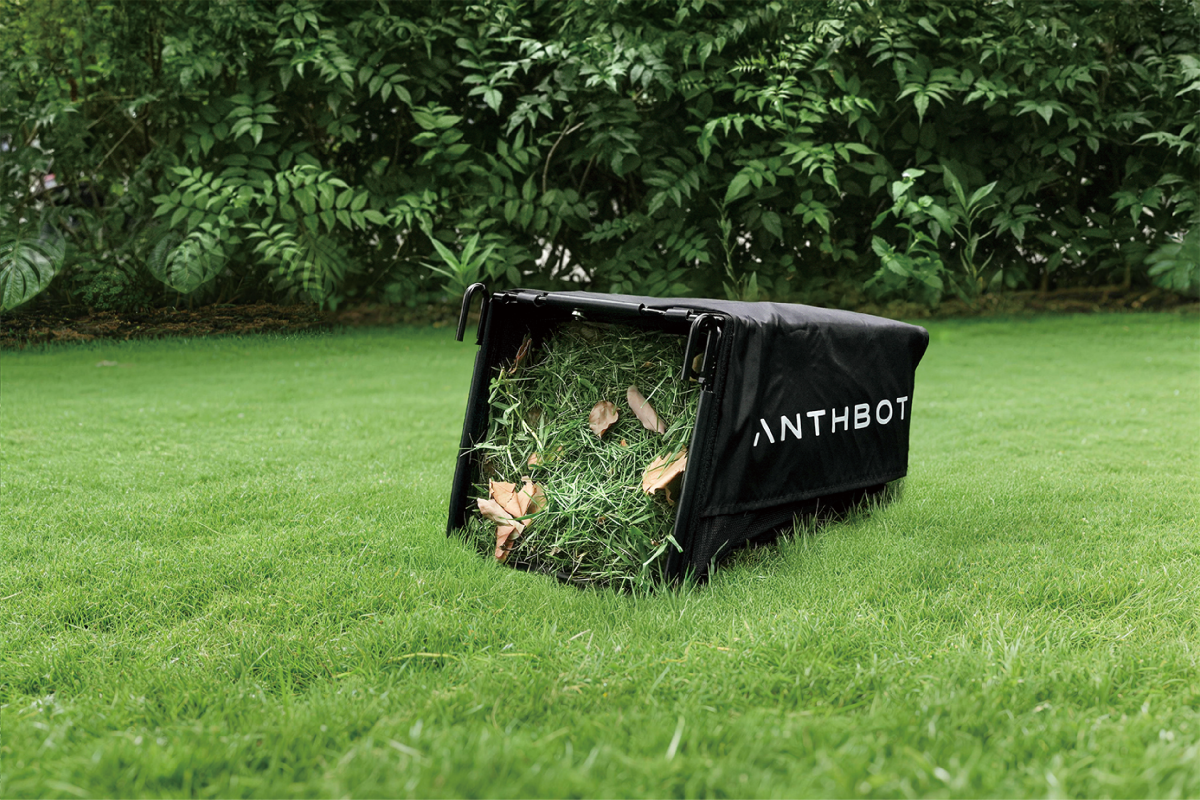
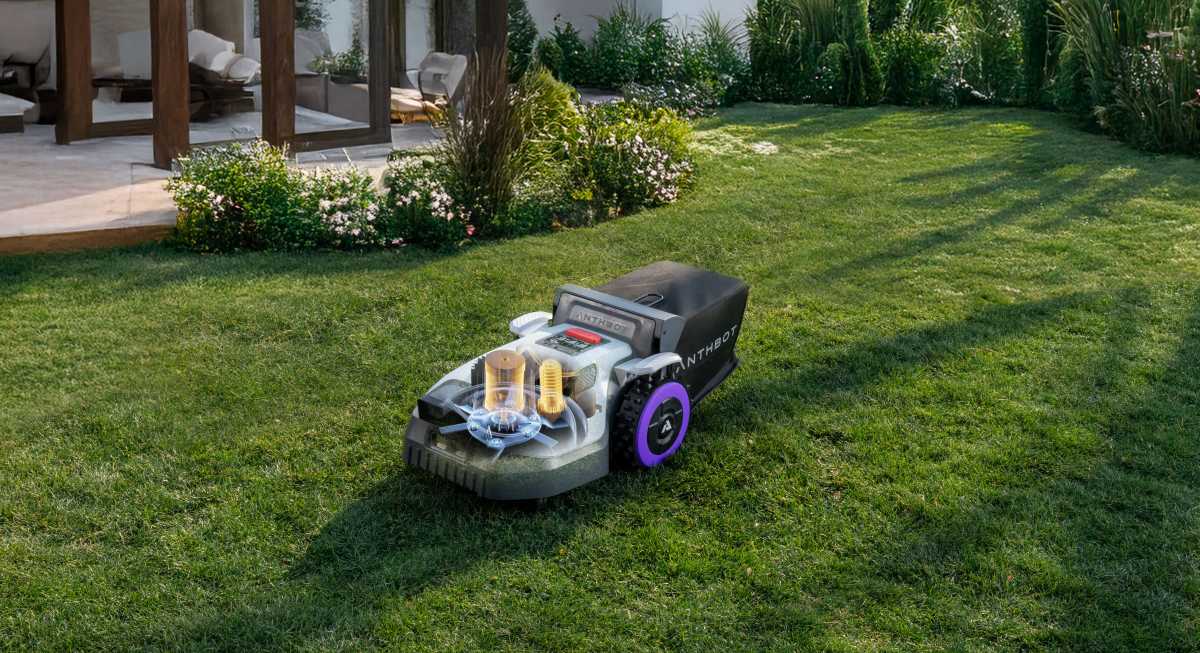
Specially shaped blades generate powerful airflow as they rotate, lifting grass clippings and leaves and carrying them into the 23-liter collection bag, much like a vacuum cleaner. The system is powered by a brushless motor running at 4,000 rpm. ANTHBOT says it can collect up to 99 percent of clippings.
That means fewer grass clippings sticking to the soles of your shoes or your dog’s paws, and a lawn that looks much tidier after mowing.
ANTHBOT
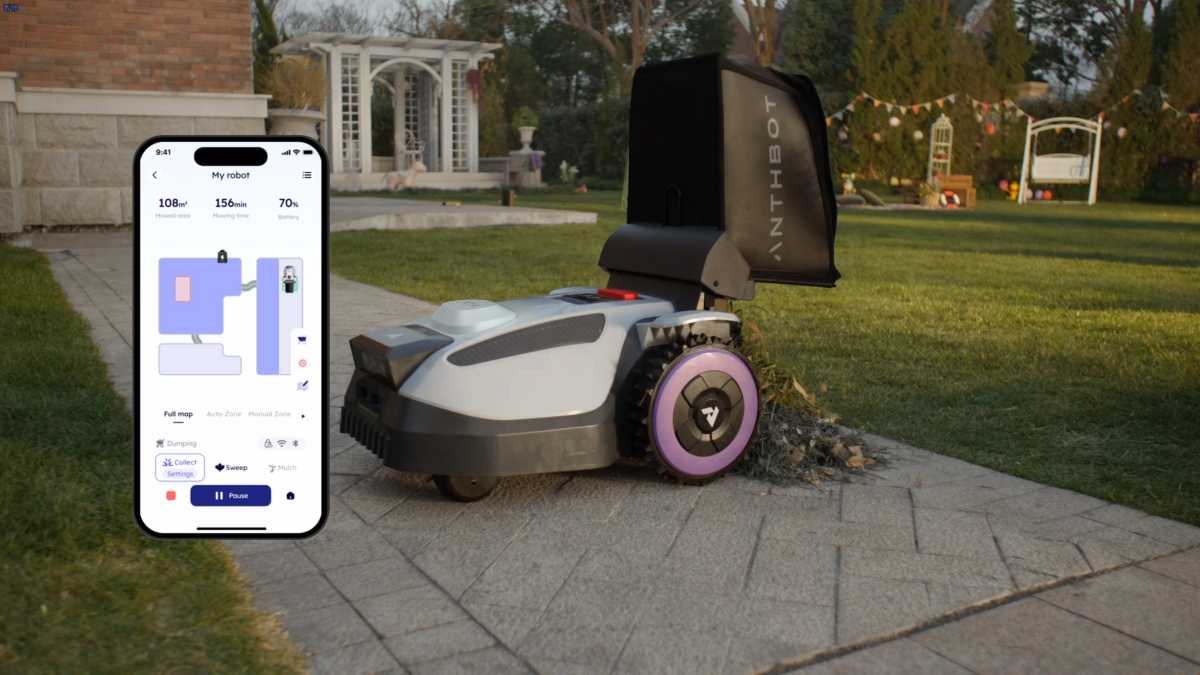
You don’t have to empty the full collection bag yourself. An integrated radar sensor monitors how full it is. When the bag is full, the N8 drives to a dumping point you have previously designated in the app, empties its contents, and then resumes mowing. In the fall, it can collect leaves in the same way. ANTHBOT calls this feature “Hands-Free Auto Dumping.”
ANTHBOT
Particle System: Fine mulch for fertilizing the lawn
If you prefer to leave grass clippings on the lawn as natural fertilizer, you can switch to the Particle System. Six blades chop the clippings finely so they fall between the blades of grass and decompose. This helps minimize clumps on the lawn while returning nutrients to the soil.
The blade module is bolted in place and can be replaced in a matter of minutes. Since you’ll typically need to switch modules only once or twice per season, it shouldn’t be something you have to do frequently.
In practice, this gives you a choice: Leave finely chopped grass clippings on the lawn as fertilizer, or collect them in the grass bag.
ANTHBOT
Navigation without a boundary wire
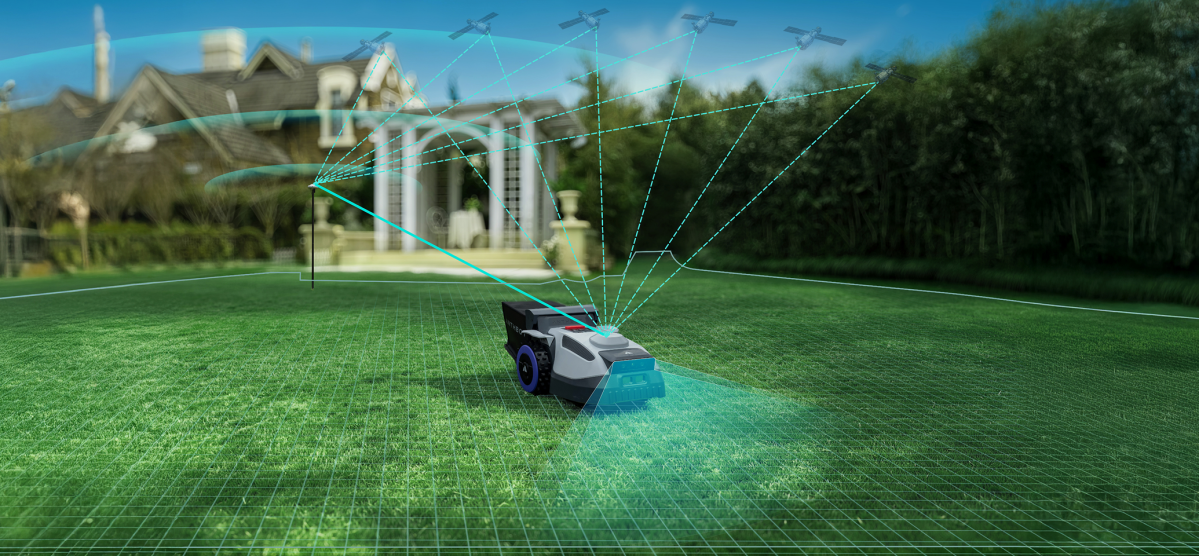
You don’t need to install a boundary wire in the ground. The ANTHBOT N8 combines full-band RTK positioning with two HDR cameras, a system ANTHBOT calls Dual Vision, to navigate with centimeter-level accuracy.
According to ANTHBOT, the RTK module in the robot and its base station can receive signals from 155 satellites. The company also claims the system connects five times faster and offers 150 percent greater signal stability than narrowband RTK systems.
Satellite positioning provides location data, while the cameras monitor the mower’s surroundings. If one of the two systems becomes less reliable — for example, beneath trees, alongside a hedge, or under a play structure — the other can help maintain navigation.
The cameras are also used for obstacle detection. ANTHBOT says the N8 can recognize more than 1,000 types of objects, including garden hoses and children’s toys.
ANTHBOT
If cellular coverage on your property is good, the N8 can also use NetRTK over 4G. In that case, you may not need to install your own RTK reference station in the yard. For particularly large or complex properties, ANTHBOT also offers a second RTK station.
Designed for large lawns
ANTHBOT recommends the N8 for lawns of up to 1,500 square meters, or approximately 16,150 square feet. The manufacturer states a maximum mowing capacity of 135 square meters, or about 1,450 square feet, per hour.
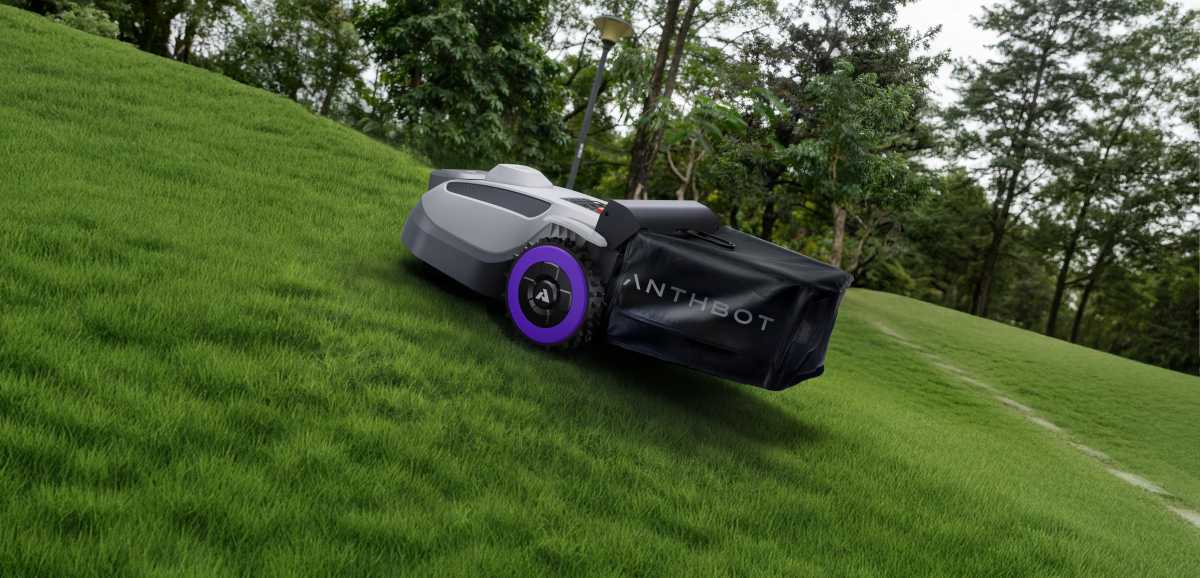
Power comes from a 9.2Ah, 198Wh lithium-ion battery, which ANTHBOT says takes around 80 minutes to fully recharge. The robot can handle slopes of up to 45 percent, or about 24 degrees.
Without the grass collection bag, the N8 weighs 16.5 kilograms, or about 36 pounds. Its weight helps provide traction when mowing on slopes.
Control zones, cutting height, and schedules in the app
Once mapping is complete, you can create up to 30 mowing zones and connect them using virtual pathways. You can also set the cutting height between 3 and 7 centimeters, or approximately 1.2 to 2.8 inches, directly in the app, with a motor automatically adjusting the cutting deck.
The N8 mows in systematic U-shaped patterns and can mow separately along the edges of flower beds and paths. Once a map has been created, you can make adjustments to it in the app.
The robot also includes a rain sensor and can automatically adjust its mowing schedule when it rains. An LED light helps the cameras operate in low-light conditions. Even so, it’s best to schedule mowing during daylight hours, since hedgehogs and other small animals may be active around dusk and dawn.
ANTHBOT
The housing is IPX6 rated and can be rinsed with a garden hose. When mowing or mulching, the N8 operates at a claimed maximum noise level of 58 decibels. When collecting grass clippings or leaves, the maximum rises to 68 decibels.
The robot can connect via 2.4GHz or 5GHz Wi-Fi, 4G, or Bluetooth.
This robot handles the cleanup, too
Many robotic lawn mower manufacturers focus primarily on automating the mowing itself. The N8 goes a step further by also tackling some of the cleanup that would otherwise need to be done afterward.
Its Cyclone System can collect grass clippings and leaves from the lawn, while the Particle System finely chops grass clippings so they can remain on the lawn as mulch. For homeowners with lawns of up to 1,500 square meters, the N8 is the most capable model in ANTHBOT’s current lineup.
The ANTHBOT N8 costs $1,699 (RRP), with sales beginning September 10, 2026.
Further information on the N8 and other ANTHBOT models is available at anthbot.com.