On Losing Yourself in Motherhood (and What Actually Helps)
I was 23 when my son was born. Technically an adult, though even then I knew that was sort of laughable. (I’m 44 now and still occasionally scan the room for the actual grown-up.) I was rocketed from burgeoning adulthood into motherhood, and if I’m being honest, I’m only just beginning to understand what that did to me.
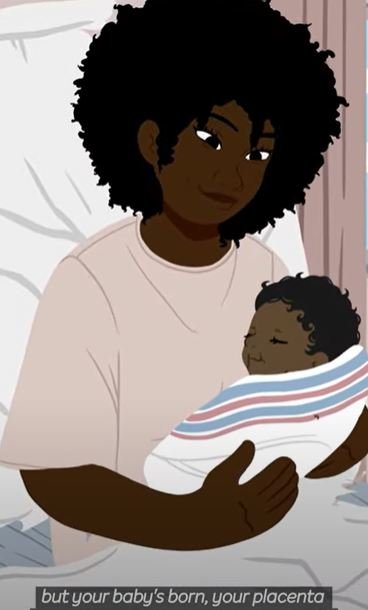
I remember one afternoon, baby content in my arms, some version of okay, catching a glimpse of myself in my bedroom’s full-length mirror. I turned to face it fully and just stood there, taking in the reflection. It was jarring in a way that I didn’t know how to make sense of. The woman looking back at me looked convincing. If I’d passed her on the street, I wouldn’t have questioned a thing. But the only thought I had, standing there, was: who the hell is that?
The kind of loneliness a playdate won’t fix
It turns out there’s a name for what I was feeling. Or at least, a framework. A study out of Finland, published this year in the International Journal of Qualitative Studies on Health and Well-being, identified three distinct types of loneliness that new mothers experience: social, emotional, and existential. The first two are relatively familiar. Social loneliness is the “everyone else’s life kept moving” feeling. Emotional loneliness is feeling alone even in a room full of people who love you.
Existential loneliness is the harder one to pin down. The researchers described it as a feeling of being “forgotten as a person,” of existing as a mother rather than as an individual. Participants described feeling machine-like. Invisible. Reduced. It’s the kind of loneliness in motherhood that isn’t solved by a playdate or a partner who does more dishes.
Victoria Trinko and Julia Sarewitz are the co-founders of Seed Mother, a Columbia University-developed maternal education program built around the concept of matrescence, the identity transformation of becoming a mother. When I shared the Finnish study’s language with them, they recognized it immediately.
“Many mothers describe feeling confused, disoriented, overlooked, not seen, invisible, unacknowledged, underappreciated, numb, resentful,” Trinko told me. “We often hear: ‘I don’t feel like myself,’ or ‘I don’t feel like I matter anymore,’ or ‘Why didn’t anyone tell me it would feel like this?’ There can be this sense of being reduced to a role: ‘I feel like a cow,’ or a ‘feeding machine,’ where mothers’ needs feel almost beside the point.”
What the Finnish study calls existential loneliness and what Seed Mother describes through matrescence are, as Trinko put it, “pointing to the same core experience: not just feeling alone, but feeling completely unfamiliar to yourself and others in the process of becoming someone new.”
Why “you have so much support” doesn’t always help
One thing the study makes clear, and that I can confirm from experience, is that this particular loneliness doesn’t care how much support you have. You can have a hands-on partner, a mother who shows up, friends who text. You can be surrounded by people who love you and still feel it. Trinko explains this as existential loneliness being “more about your relationship to yourself.” When a mother is disconnected from her own inner experience, no amount of external support can reach that place. And when that internal disruption goes unacknowledged by the people around her, partners, doctors, society, it deepens. “That can deepen the sense of isolation,” she said.
Grief is part of it
We hand new mothers a narrative about the happiest time of their lives, and then act baffled when they feel alone in ways they can’t explain. Sarewitz is direct about the grief component. “Many mothers grieve who they were before, their identity, independence, lifestyle, or sense of control. And what makes this especially complex is that it coexists with love, joy, and meaning.” She points out that we’re not culturally well-equipped to hold two opposing truths at once, that you can feel deep gratitude and deep loss simultaneously, and that one doesn’t cancel out the other.
The study’s researchers also flagged something that Seed Mother has identified in their own work: standard postpartum depression screening tools aren’t built to catch this. Trinko put it plainly: “Clinical models tend to oversimplify what is actually a normative, multidimensional, developmental transformation.” A mother can clear every clinical threshold and still be quietly struggling with the question of who she is now. “If we don’t acknowledge that broader experience,” Trinko said, “we can’t normalize it and we can’t adequately support mothers through it.”
It doesn’t always hit when you expect it to
What also tends to get missed is the timeline. We talk about the newborn phase like it’s where all the hard stuff lives, and in some ways it is. But many women will tell you the bottom drops out later, when the baby is sleeping through the night, when you’re back at work, when you’re supposed to feel like yourself again. Trinko describes it as a kind of cognitive dissonance: “I look fine, everything is okay, so why don’t I feel like myself?” Matrescence, she and Sarewitz explain, isn’t linear. It’s cyclical. It resurfaces at different transition points, a second child, a return to work, kids growing into independence. There’s no clean endpoint.
When my son was six, I had my daughter. By then, I’d grown into my life as a mother in ways that felt real and solid. Or so I thought. Several years later, my relationship ended. And it was only then, in the forced-open space that followed, that I began to actually excavate who I was outside of being a mother, outside of being defined by that relationship.
What I’m about to say could easily be misconstrued, but co-parenting saved me. I used to whisper it to close friends who’d admit to being jealous of the swaths of unstructured, child-free time that came with it. Or I’d say it to others in the same situation and watch their shoulders drop with relief. Don’t get me wrong, at first, time without my kids was gut-wrenching. But over time, we all began to thrive. Those stretches of time that were just mine became the container for a lot of what I’d been missing. And what I understood, slowly and then all at once, was that I hadn’t really lost myself so much as never fully found her.
What moving through it actually looks like
Sarewitz describes the resolution of existential loneliness not as a return to who you were, but as becoming “someone who is more integrated and expanded.” Their pilot study found that mothers who went through matrescence education reported increases in self-compassion, emotional resilience, and community connection, and felt better prepared for the identity shifts ahead. “They move from feeling isolated to feeling seen and understood,” she said, “from self-doubt to self-trust, and from disorientation to a greater sense of clarity and connection.”
The Finnish researchers suggest that healthcare providers start asking different questions, not just about mood, but about identity. Do you feel invisible, not just as a mother? Do you feel lonely even when you’re with others? What has this experience been like for you?
That last one is so simple it almost sounds obvious. But if anyone had asked me that, standing at that mirror, holding my baby, staring at a stranger, I think it might have changed something. Knowing that what I was feeling had a name. That it wasn’t a malfunction. That the in-between is supposed to feel like the in-between.
You’re not disappearing. You’re becoming.