EBB 396 – Inequities in VBAC Access with Dr. Nicholas Rubashkin, MD, PhD
Dr. Rebecca Dekker – 00:00:00:
Hi, everyone. On today’s podcast, we’re going to talk with Dr. Nicholas Rubashkin about inequities in VBAC access. Welcome to the Evidence Based Birth® Podcast. My name is Rebecca Dekker, and I’m a nurse with my PhD and the founder of Evidence Based Birth®. Join me each week as we work together to get evidence-based information into the hands of families and professionals around the world. As a reminder, this information is not medical advice. See ebbirth.com/disclaimer for more details.
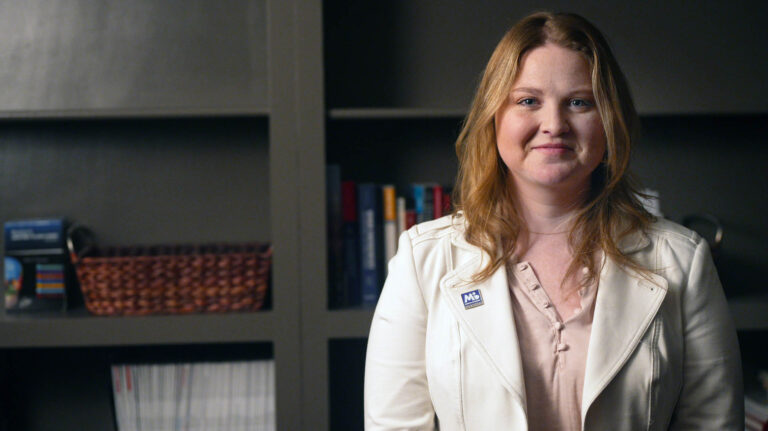
Hi everyone, and welcome to today’s episode of the Evidence Based Birth® Podcast. Today, I am so excited to have Dr. Nicholas Rubashkin with me to talk about VBAC access. Dr. Nicholas Rubashkin has his MD as well as his PhD in global health, and he is an associate professor in the Department of Obstetrics, Gynecology, and Reproductive Sciences at the University of California, San Francisco, where he works as an obstetric hospitalist. Dr. Rubashkin’s dissertation research examined the ways in which a race-adjusted clinical algorithm, which was called a vaginal birth after Cesarean calculator or VBAC calculator, reproduced racism in the United States maternity care. Since 2022, he has been a women’s reproductive health research scholar at UCSF, conducting NIH-funded research on equitable access to VBAC in California and Dr. Rubashkin also serves on the board of the international nonprofit Human Rights and Childbirth. Dr. Rubashkin, welcome to the Evidence Based Birth® Podcast.
Dr. Nicholas Rubashkin – 00:01:36:
Thank you so much. I’m really excited to be here today. As an OB care provider, I’ve often shared your evidence summaries with women, families. So I’m thrilled to be here. I really admire your work.
Dr. Rebecca Dekker – 00:01:47:
Yeah. And we always love having an OB advocate on the podcast. I keep meeting more and more of you out there. So can you tell us a little bit about like what brought you into this field in the first place?
Dr. Nicholas Rubashkin – 00:02:00:
Yeah, how I often tell this story is I actually had considered obstetrics until I did the rotation in medical school, which was kind of surprising because birth was a really big topic in my family. My mom was one of nine children, and her mother gave birth to her during the era of twilight sleep and had nine children unconscious. And I was born at home, which was a normal place to be born on this geographically remote island in Maine. And so that birth experience was very powerful for my mother and my father. And I grew up with that as a story as also being a powerful birth for my grandmother. I was the first birth that she was conscious for and witnessed. And so I grew up with this powerful birth story that in my family, and when I did my obstetrics rotation, it all just kind of came together for me in terms of in many ways, born to do this work, which really is about kind of blending the best of quality medical and surgical care in pregnancy when needed and honoring the experiential aspects of childbirth.
Dr. Rebecca Dekker – 00:03:06:
Did you have any other siblings who were born at home?
Dr. Nicholas Rubashkin – 00:03:08:
So my older sister was born in a hospital, and that was kind of part of the driving force of having me at home was that experience was not a good experience for my mother and my dad. At that time, you know, it was common for fathers to be excluded from the birthing room. So they were separated. And then when we moved back to the mainland of Maine, I witnessed shortly after I was four and a half years old, my brother was born at home. Yeah, so those were, you know, very kind of early formative experiences that were there in the background when I was deciding about obstetrics. Then kind of fast forward regarding research. When I was in practice as a young, newly graduated Finnish residency obstetrician, I became really interested in, you know, based on my background, really the kind of home birth and hospital birth divide in the United States and collaboration between midwives and doctors. I practiced at that time in San Francisco at a small community hospital that interfaced frequently with the home birth community. It was through those experiences I became kind of more deeply interested in global health and really kind of the global perspective on home and hospital birth regulation of midwives globally. And also this emerging conversation around respectful maternity care. My family is from Hungary on my dad’s side.
And so I spent a year in Hungary where home birth had just recently been legalized. And I spent a year doing research there, doing a survey on respectful care outcomes. So kind of, measures of shared decision-making in childbirth and comparing those outcomes across kind of home and hospital birth, which, as I said, was a new option. And so that experience there was what inspired me to start a PhD to more at that time, really deeply understand some of these details around how do you measure experiences of respectful care and childbirth. But I became kind of more interested in, as many others were at the time, around what are some of the drivers of these experiences of mistreatment in childbirth the world over, which include issues around informed consent, but also other forms of mistreatment in childbirth. And particularly, what is the role of obstetricians and the role of science in obstetrics in sometimes, unfortunately, contributing to experience of mistreatment the world over.
Dr. Rebecca Dekker – 00:05:32:
Yeah. So I’m just curious, at some point, did you witness disrespect or mistreatment or obstetric violence, like in medical school residency or later on down the line?
Dr. Nicholas Rubashkin – 00:05:43:
Yeah, I mean, I think what was in this time that I was working internationally and becoming involved from a research perspective on these measures of, of respectful care. I was also interacting, a bit. And networking with human rights lawyers who were starting to use different legal mechanisms to advance arguments around mistreatment and childbirth and look for accountability in childbirth around this topic. And so I was serving in a series of court cases as an expert witness where informed consent was not upheld. And that was a piece of how people were harmed during their birth. So I was at the same time becoming kind of familiar with educating courts about informed consent standards and obstetrics and respectful care standards and obstetrics. So I think it was some of those participation as an expert in some of those cases. And also several of those human rights lawyers who I was colleagues with had themselves experienced mistreatment during births, particularly seeking VBACs. And so I brought to the dissertation work, which I think we’ll get to this perspective that even for human rights lawyers, it was difficult to achieve a VBAC. And that was through those networks that I’d learned also of Renaud Dray’s court-ordered Cesarean that happened in kind of the early, I think the early 2010s in New York City.
And so brought to the dissertation work, this knowledge that VBAC was largely inaccessible to many people around the world, but my dissertation ended up being on VBAC in the United States. And it was very difficult for even the people who had access to VBAC sometimes to achieve a VBAC. So I think that it was, yeah, some of the legal cases I was involved in. But I will also say that in my first job outside of residency, which was really this lovely practice, collaborative practice with nurse midwives and OBs working together to provide care to a community in San Francisco. At that time, we were primarily kind of administrative reasons. We’d just been acquired by a new hospital system. We had stopped providing VBAC. And I think I thought at that time that our referral systems worked to preserve people’s choices, that people could change hospitals if we notified them early enough. But I now know that that is even geographically compact space like San Francisco, that leaving our hospital to seek a VBAC when we didn’t offer it was not. Accessible to all of our patients.
Dr. Rebecca Dekker – 00:08:32:
So, yeah, that brings to mind the barriers to VBAC access. So can you talk about what you see are the biggest barriers to VBAC in the United States in particular?
Dr. Nicholas Rubashkin – 00:08:43:
Yeah, we have to kind of go back a little bit and talk about the history of VBAC in the U.S. And how that’s kind of evolved. Is that in the kind of late 80s and early 90s, there wasn’t yet a large amount of evidence about the safety of VBAC. And so it was in that time period that I think we’ll talk a lot about evidence today because of what everything you do in this blog does and podcast does. So some of the first kind of evidence of the safety of VBAC dates to that time. And those well-designed studies showed that VBAC was largely safe for mother and baby, that the risks of attempting a VBAC, such as uterine rupture or having an attempt of a VBAC that then transitioned into a second unplanned Cesarean, that those risks were low in the absolute sense, like low numerically. And so VBAC rates rose after those studies came out. But then some studies in the late 1990s quantified the risks of VBAC in a different way. And there was some professional debate about particularly the risk to the fetus in an attempted VBAC and whether an unlikely event of uterine rupture should occur in an attempted VBAC. And it was primarily professional kind of interpretations that shifted in the late 90s and early 2000s to say that that risk of uterine rupture was excessive. And if it was too risky, only certain hospitals should be certified to provide VBAC, namely having a surgical team that was immediately available to deal with the unlikely event of a uterine rupture.
And so it was this immediately available standard that was published in the late 1990s that did and continues to drive down access to VBAC for most people in the United States. So there was a national guideline that came out stating that this immediately available standard was such that a hospital had to have a surgical team in the hospital at the ready to support VBACs and deal with uterine ruptures if they happen. Many hospitals did not have the resources to maintain a surgical team immediately available and stopped offering VBAC as a result. And since then, there’ve been two revisions to national guidelines that have tried to soften the language and actually do away with that immediately available language. I’m currently doing interviews with providers at different California hospitals that still show that that immediately available standard is in force in many places. And so I would say that that is still the main barrier. And what it does is it sets up on the ground that OBGYN, OB surgical providers have to make tough decisions about their work life balance, which are difficult and sort of choosing between supporting patient autonomy. Perhaps in supporting a VBAC, but also making choices about how much time literally they’re having to spend in the hospital.
Dr. Rebecca Dekker – 00:11:37:
So you’re saying that in some hospitals, the immediately available standard doesn’t just include like the anesthesiologist and the operating room team, but as well as the OBGYN, the surgeon has to be on site at all times while someone is laboring after a Cesarean is trying to have a VBAC.
Dr. Nicholas Rubashkin – 00:11:54:
Exactly. Yeah. If that wasn’t clear yet, it’s the person with OB surgical privileges. So it can be like the family practice doctor who knows how to do competent doing C-sections, the OBGYN, but also, yes, the anesthesiologist, like it could be the main operating room team, you know, in smaller hospitals, sometimes with that, the team that supports surgical birth. So it’s whoever is that core team that would mobilize for an emergency Cesarean. VBAC is the only kind of birth that people still experience this kind of mandate on the ground that they need to be immediately available.
Dr. Rebecca Dekker – 00:12:33:
And this is even though it’s my understanding ACOG kind of put forth this immediately available standard, which was a little bit vague and people interpreted it as how you’re describing. And then they kind of retracted or went back from that and said, actually, we’re not going to say that in our standards, in our professional guidelines, but hospitals continue to operate as if that was the standard of care. Do you know why?
Dr. Nicholas Rubashkin – 00:12:58:
Yeah, so ACOG kind of softened the immediately available language in 2010. And in direct response, my understanding, I wasn’t involved in those conversations, but seeing that how the immediately available standard drove down access to VBAC in the 2000s. Then in 2017, revision of their national VBAC care guidelines much more explicitly said that VBAC can happen in any maternity care facility with the capability of carrying out an emergency Cesarean, which is any place, any hospital where labor and birth are happening has the capability to do emergency Cesareans. And so that 2017 revision really kind of made that much more explicit. I’ve been doing interviews with, and I’m working on writing this up and publishing it. So it’s unpublished and unpeer-reviewed, but I can kind of share some preliminary findings, is that some hospitals in California did actually resume offering VBAC over the last 15 years as those guidelines have become less rigid. And that actually did help some hospitals resume VBAC services. But interestingly enough. The ones that I’ve identified all resumed VBAC services with some kind of immediately available guideline. So they still were working off the old guidelines, even if the new guidelines made the environment slightly more friendly to offer VBAC. So they still all figured out some way to have their providers, OBs, sometimes anesthesiologists, be in-house to when there was a VBAC happening.
Dr. Rebecca Dekker – 00:14:38:
They had to be on site.
Dr. Nicholas Rubashkin – 00:14:39:
Yeah.
Dr. Rebecca Dekker – 00:14:40:
Okay. And so I think that was something that I find really fascinating. My sister is an attorney in the field of defense of medical malpractice and many, many years experience. And she was explaining to me once, this was years ago, that most people think they can have a true and emergent Cesarean at any hospital. But in most hospitals, you have to call in those staff if it’s not typical office hours, correct? So they might be 15, 20, or 30 minutes away from the time we need to do this surgery to when you actually get one. Is that correct? In many hospitals?
Dr. Nicholas Rubashkin – 00:15:20:
Correct. Yeah, and I think that what has happened is that because of this immediately available standard being applied only to VBAC.
Dr. Rebecca Dekker – 00:15:31:
And not to other births.
Dr. Nicholas Rubashkin – 00:15:32:
And not to other kinds of births. Is that on the one hand, it’s raised tremendous ethical and even legal questions around really, and this is kind of what drives me in this doing research in this space, is that VBAC is one of the few, maybe the only examples in modern medicine where a class of patients are required to have surgery. When there’s a physiologic alternative vaginal birth, that is considered reasonable. And so we don’t require, from an ethical standpoint, that patients have surgery when there are alternatives. And there’s even case law. Some legal expert discussions in the VBAC space wondering whether VBAC bans are could be challenged on constitutional grounds. And so it sets up these VBAC bans, set up a different standard that VBACs are judged by. But it also kind of raises a question you raised and comes up in some interviews with people who resume VBAC services at their hospitals, some of which were smaller hospitals with fewer resources. Posing this question of is it just safer for everybody to have the team in the hospital to deal with any kind of emergency come up so that’s where the VBAC debate lies right now in many hospitals small hospitals that are trying to figure out this issue.
Dr. Rebecca Dekker – 00:16:58:
Yeah, I think I was thinking of it more as like a misconception that the public has that they think because they’re giving birth in a hospital, they have this, you know, they could have surgery at any moment. But for any birth, that’s not true unless you’re specifically at one of these hospitals that always has the surgical team in-house.
Dr. Nicholas Rubashkin – 00:17:16:
Yeah. And yeah, what I’ve found is that places that at least in the, some of the rural hospitals that I’ve interviewed. Providers make that part of the informed consent process prenatally is they discuss the limitations of the hospital and in asking providers about how those conversations go. What they say, I haven’t interviewed their clients, but that in kind of rural, remote places, people have an understanding that there are more limited resources of their hospitals. And that kind of there’s some trust in that their providers will do what they can to kind of mitigate that risk. But- Yeah, anticipate. We try to act early. Yeah, so that there are tradeoffs, basically, that these providers try to inform their patients in advance of the birth.
Dr. Rebecca Dekker – 00:18:02:
What about malpractice insurance or like insurance at the hospital or the providers have to carry. Does that act as a barrier to VBAC access?
Dr. Nicholas Rubashkin – 00:18:13:
It’s a little bit outside my area of expertise, but what I can say is that providers who worked to resume VBAC services at their hospitals definitely had to, not all of them, but some of them did have to wrestle with this issue. What’s interesting is that some were successful in negotiating with malpractice carriers, essentially by saying, look, we’re forcing patients to have surgery. This is not ethically okay. This violates my ethical framework. This violates modern medical ethics frameworks. And we made successful arguments to insurance carriers saying, okay, it sounds like you’re not comfortable with women making decision in favor of a VBAC. What if we call this protocol, a declining, a repeat Cesarean protocol rather than a VBAC protocol? And that the malpractice carrier was more comfortable with that languaging and, kind of then was willing to kind of let this hospital resume VBAC services. So it is something that needs to be navigated. What I’ve seen, at least in kind of individual interviews, it’s not insurmountable.
Dr. Rebecca Dekker – 00:19:21:
Okay. What about any other barriers to VBAC access, even for people who want it and are good candidates?
Dr. Nicholas Rubashkin – 00:19:28:
Immediately available standard, it’s the barrier that causes places not to offer VBAC. The next level of that is that it is often the barrier that causes people, places not to support induction of labor because induced labor is often longer. And so then the interpretation of the immediately available standard that requires that a provider be in the hospital for the duration of an induced labor is then creates a barrier around supporting people, that essentially have medical risk factors. I think that, so you’re asking about good candidate, we might loop it to the calculator. I don’t know if we want to, some of the conversation we’re going to have today is about the VBAC calculator, which I studied, is that the calculator itself became a new barrier separate from the immediately available standard.
Dr. Rebecca Dekker – 00:20:17:
So what do you mean by that? How did the VBAC calculator stop people from being able to have VBACs?
Dr. Nicholas Rubashkin – 00:20:24:
To review for the listeners, the VBAC calculator is a prediction tool. So it is, you put in a set of factors. And so the factors were maternal age, body mass index, race and ethnicity, and some clinical factors like prior birth history, whether somebody had a VBAC or a vaginal birth, and what the reason for their prior Cesarean was. And this is a very common structure for what VBAC prediction tools contain. And a VBAC prediction tool, at least in theory, was designed to help people make more informed choices about their whether to have a VBAC or a repeat Cesarean. So put those factors in and it gives somebody a percent chance that the VBAC will end in a vaginal birth. And so the VBAC calculator became a barrier to access to VBAC, especially for VBAC interested, Black and Hispanic women. And so because of the way the VBAC calculator factored race and ethnicity, which was one of its variables, assessed Black and Hispanic patients as having around like a 15-point percentage point lower chance of having a vaginal birth compared to white patients with similar risk factors. And so some OB care providers then use, say, a low probability result from the VBAC calculator. As a reason to counsel against or strongly discourage. And unfortunately, sometimes in some cases, prohibit women with low scores from attempting a VBAC.
Dr. Rebecca Dekker – 00:22:04:
Is that still a problem today?
Dr. Nicholas Rubashkin – 00:22:06:
I should say the calculator was revised in 2021 to remove race and ethnicity. And that was driven in large part by activism inside the field of epidemiology and medicine to reframe the use of race and ethnicity in these models as a piece of racism and measuring how racism works in health and society rather than race as kind of an epidemiologic or biological risk factor. So the calculator had race and ethnicity removed. It was revised. This issue of kind of What is a low score and what does that mean? Do providers the authority just to kind of forbid people to have a vaginal birth based on a low score. I am seeing is an idea that the VBAC calculator contributed to and is still persisting in interviews that even in the new calculator, which many people are using, which I think does remedy some of the most concerning negative racial equity impacts of the VBAC calculator, there still are instances where providers use the calculator as a barrier to people who have low scores and are really interested in a VBAC.
Dr. Rebecca Dekker – 00:23:27:
Almost becomes like a self-fulfilling prophecy. So if you get a low score on the calculator, the provider thinks, well, you’re not a good candidate. And so they’re less likely to support you having a VBAC or they say you can’t have one. And you mentioned race, but it also sounds like BMI is also a limiting factor. Like there might be some fat phobia built into the calculator as well.
Dr. Nicholas Rubashkin – 00:23:49:
Yeah, I think the calculator, it brings up this real tension between. Lived experience and statistical expertise. And the calculator uses these statistical categories around age, BMI used to use race and ethnicity, even some of the clinical things about clinical contributing factors, like having a prior Cesarean for failure to progress, you know, necessarily these categories, you know, collate population data and averages, et cetera. And what I did in my dissertation work was put this calculator in front of its tended users, namely a range of women of different backgrounds who had different birth histories and in various ways asked for their insights into this calculator. And you’re exactly right that people with elevated BMI, as in my study, were asking for more nuance from the statistical category. It was didn’t match their lived experience of their bodies that, you know, I may be overweight. I have this experience of my body in terms of I’m active, I’m healthy, I don’t have other diagnoses. Some identified BMI as being a Eurocentric way to categorize categorized physical forms. And, you know, on these grounds, you know, rejected that this calculator could assess their ability to give birth.
That same way the category of race and ethnicity in the calculator this is kind of the critique of a lot of race and ethnicity categories and their use in producing evidence is that it collapsed huge range of human diversity and forced it into categories that were arranged hierarchically artificially. And so some of the most revealing interactions with the calculator from some of my women participants were people who are of mixed race background because they really demonstrated how reductive and fictitious and even violent the use of this race and ethnicity category in the calculator was and really rejected that this was any kind of biological assessment of their body, that the race and ethnicity variable didn’t assess their ability to give a vaginal birth and sort of their multiracial background led them again to reject the calculator as relevant, you know.
Dr. Rebecca Dekker – 00:26:12:
It’s trying to fit people into these neat categories and that were you know. Discriminatory to begin with, because there’s no proof that just because you’re Black, you can’t have a VBAC, but it may be due to the provider bias, right, against Black women. Correct?
Dr. Nicholas Rubashkin – 00:26:32:
Right, that racism operating on different levels was the reason for that initial association between a lower chance of a VBAC. Rather than have a quasi-biological explanation. I will say that the providers who use the calculator didn’t necessarily have to believe that Black or Hispanic bodies were inferior at having a vaginal birth. They adopted the calculator, you know, mainly believing that it was an evidence-based tool that could help, uh, help their patients. Um, and so they didn’t have to have sort of racist ideas about bodies being different. Just that this association between race and ethnicity and VBAC was a true statistical association.
Dr. Rebecca Dekker – 00:27:19:
And then the tool just kind of kept perpetuating that until it was updated. Still not perfect, but at least it has that aspect removed. Any other research about who has access to VBAC and who doesn’t? What other groups have inequities with maybe when they talk with their provider or when they’re going to a hospital who may have the option to VBAC versus those who don’t?
Dr. Nicholas Rubashkin – 00:27:43:
Wasn’t clear, kind of what I was saying about the immediately available standards, still being the major driver. How that maps out is that, the hospitals that have the resources to provide VBAC, are more likely to be in urban centers, have residency training programs, be higher volume birth units. Just with more resources to maintain, all that staff, already in the hospital. So, rural hospitals, smaller hospitals. The hospital I worked at was a smaller community hospital, that did slightly under a thousand births in San Francisco, at that time. So there’s a big geographic disparity in terms of rural and urban. But in California, in trying to do research on this topic around which hospitals have barriers, there’s a surprising number of hospitals in urban centers that don’t offer VBAC still because they are kind of the smaller hospital in their milieu, like the one I worked at and don’t have in-house services. Or there were also examples of hospitals that had the resources. But for various ways that their hospital practices are structured, there’s sort of this high-volume hospitals that have multiple small practices that deliver at their hospital. So there may be requirements that there’s a core group of those providers who stay in hospital because they have more volume, but some of the satellite groups have lower volume and are not in the hospital consistently. And so some of those smaller groups also may not offer VBAC, even though they largely have attend births at a hospital that has resources. It’s quite challenging from, I think, a patient perspective to understand like which hospitals, which groups delivering at a certain hospital are, have fewer barriers to providing VBACs.
Dr. Rebecca Dekker – 00:29:35:
Yeah, I think it does. It sounds like rural populations, people who are giving birth at smaller hospitals and maybe who have a provider who’s with a practice that doesn’t support VBAC within their small practice, even if other practices do. And you mentioned induction earlier. So if someone is high risk, maybe they have multiple health conditions and they’ll likely need an induction. Does that lower the access to VBAC for some people?
Dr. Nicholas Rubashkin – 00:30:02:
It does for some people, like I said, that some providers or some hospitals and providers don’t offer inductions for VBACs because of the way that they interpret the immediately available standard. There are some hospitals that do offer inductions to VBACs That is, it is evidence-based. It’s in the core national ACOG guidelines that doing induction of labor in the setting of a prior Cesarean, while it increases the chance of uterine rupture, that that’s still considered a low absolute risk, and shouldn’t be a reason to not induce labor. There’s some different ways that we use to induce labor when there’s a prior C-section. Some we avoid, tend to avoid prostaglandins in those induced labors. There are some nuances to doing inductions in the setting of someone who’s had a prior Cesarean, but it is considered evidence-based and safe.
Dr. Rebecca Dekker – 00:30:50:
Another thing that we see at EBB is people who say, my provider said they support VBAC. But when it got closer, they wanted to schedule my Cesarean. And there’s even a name for it called bait and switch. So knowing that that’s a possibility, you know, for someone who’s had a prior Cesarean and wants to pursue a VBAC, what are some ways they could advocate for themselves when they’re talking with their care provider and doing that kind of the prenatal visits? Any questions you suggest people ask or conversations they should have?
Dr. Nicholas Rubashkin – 00:31:23:
I’ve heard of the bait and switch and I’ve had some lawyers ask me like whether we have good data on this kind of specific way that people who’ve really made their best effort to find a VBAC friendly provider have this late shift that really kind of undermines their decision making capacity and makes it very difficult for them to then change care providers late in pregnancy. I don’t think that we have good data on how often this this happens as a way that informed consents undermined in VBAC decision making. But nonetheless, it is a piece of this that is is problematic for sure. So. I’m struggling a bit because I think that it’s a real challenge to try to prevent because in this situation, the provider has not been transparent until late in the pregnancy. So I think some of the ways that you can get try to circumvent that is to start early. I think that sometimes starting this decision making process in when you get pregnant the next time has more time pressure.
So I think that educating yourself early, even, you know, to the extent that that you’re ready for that information after you’ve had your first Cesarean. I mean, I know there’s a lot generally going on, for folks when they’re recovering from their first Cesarean. And it’s hard to even think about what your next birth might be like, but when whenever you’re ready for that, I think that, if you’re able to start thinking about what that VBAC could look like, and and it takes kind of looking around at what your options are. Using advocacy groups like VBAC Facts, or the International Cesarean Awareness Network to understand kind of where VBAC in your State, is accessible and inaccessible at least in California, there are some publicly reported websites, that will share whether a hospital offers VBAC or not. And what their VBAC rates are, whether they’re below or above the State average. What I would say, and kind of, doing interviews and looking at kind of the landscape in California, which I think I haven’t looked at all the states, but these there probably are parallels is that there’s a group of hospitals that have VBAC rates that at or above recommended levels. And what I see, you know, the recommended level is above 18% that we can talk about kind of whether how that recommended level was made, but the places that have fewer barriers to VBAC access tend to be above the 18% mark and even kind of into the. Have VBAC rates in kind of the low 30s, places that have VBAC rates below 18%. And we’re working on some studies to kind of test this hypothesis, so stay tuned. Places that have kind of lower VBAC rates probably have more barriers, which kind of makes sense. So I think that looking at the actual VBAC rate of the place you are considering delivering at, could you give you some different data than that interaction with a provider?
So I think looking for outside numeric data about the VBAC rate, going to advocacy groups to see what’s kind of known about that hospital, seeing if you can get different information from people who have given birth at the hospital or transferred care for the same reason. Because I think it can be really hard once you get into that place late in pregnancy to then find out that you have to transfer practices or change your birth plan to, a repeat Cesarean you didn’t want. So I guess my message is kind of is try to do as much around prevention. Then I think once you, you know, when you’re talking to a provider about VBAC, it’s kind of getting a sense of like how well-rounded their counseling is around your risks and benefits. I think that the standard package of counseling that most of us are trained to do is around the short-term risks of attempting a VBAC versus a repeat Cesarean. And so the way that conversation mostly centers is around the risks of uterine rupture. And the chance of VBAC transitioning into a second unplanned Cesarean. There’s some important risks to talk about there. And you should not be afraid to ask for numbers around those. And if you are going, I think, educated with what those numbers are, what some of the pitfalls in those conversations are is that sometimes the risk of uterine rupture is significantly inflated above its baseline level, which is a 0.5% risk of uterine rupture in spontaneous VBAC labor. So those risks sometimes are inflated, which I think should be a red flag in terms of how you’re being counseled. So you kind of have to go in knowing something about the numbers, which these advocacy groups can help you with. And so that you can tell that when those numbers are not being represented well to you, that should be a red flag.
Dr. Rebecca Dekker – 00:36:17:
So well-rounded informed consent discussion that talks about risks and benefits of both, including short-term and long-term down the road. Yeah, I feel like with future pregnancies.
Dr. Nicholas Rubashkin – 00:36:28:
I think that most of the conversations will center around short-term risks and that should be done with accurate data. But I think a more robust conversation will look at the long-term risks to mother and baby. We’ll talk to you about how this VBAC fits into your family, into your future reproductive plans, that if it’s a provider who is curious about, you know, what was difficult or challenging or was easy for you about the Cesarean? What was, you know, what was your experience broadly of having a Cesarean and what you’re looking to do differently or similarly? Is somebody who’s really going to engage with you about how do we make this next birth better? Or if it was already an excellent birth for you, how do we continue doing those things? So somebody who’s really going to go with you on the experience of the birth and not just kind of the risks and the benefits.
Dr. Rebecca Dekker – 00:37:18:
Right. I guess any reluctance might be a sign that they’re not truly supportive. So if they say something like, well, if you really want to be back, like I’m happy to support you, but that kind of implies if you really want to do this, I guess I’ll, I guess I’ll support you. But somebody who says expresses enthusiasm, like I love attending VBACs. And I think, you know, that kind of, as well as I love helping people with repeat Cesareans, like I’m here for you would be the more philosophy you’d be looking for rather than someone who’s just kind of giving into your wishes just to get you in the door.
Dr. Nicholas Rubashkin – 00:37:52:
I think that’s a really good point is that that’s a piece of how VBAC is inaccessible is that there’s a lot of providers who, for the reasons we’ve been talking about, are nervous, are not enthusiastic about VBACs. And it takes a motivated, informed patient to really wade through all of these different barriers. And, you know, those folks who figure out how to attempt a VBAC, that’s hard as a patient to be that discerning and to really, you know, push for that. That’s why I think that the most recent revision to ACOG guidelines, which essentially say that VBAC should be part of level one maternity care. So maternity care that happens everywhere is because when it’s not offered as the standard, it puts, you know, because Cesarean, it’s a common way of giving birth, often overused, but it’s still, even when used appropriately, it’s common. About 20% of first-time births, when VBAC is not standardly offered to everybody, we end up in situations where the more motivated, knowledgeable folks are the ones who are able to figure out how to use the system to access their births.
Dr. Rebecca Dekker – 00:39:00:
And so again, it doesn’t help expand access for everyone necessarily, just for a few.
Dr. Nicholas Rubashkin – 00:39:05:
Exactly.
Dr. Rebecca Dekker – 00:39:06:
Yeah. Well, Dr. Rubashkin, thank you so much for coming on the podcast and sharing your knowledge with us. Is there any way people can follow your work or your publications as they come out?
Dr. Nicholas Rubashkin – 00:39:16:
Yeah, you can follow me on LinkedIn. I tend to post there professionally more sometimes on X. I tend to share things more on LinkedIn. And we do have a website at UCSF called Better Birth and betterbirth.ucsf.edu, which will be sharing the work that we’re doing with patients and providers on equitable access to VBAC in California.
Dr. Rebecca Dekker – 00:39:38:
Awesome. We look forward to reading it. Thank you so much again for coming on the podcast.
Dr. Nicholas Rubashkin – 00:39:42:
Thanks for having me.
Dr. Rebecca Dekker – 00:39:44:
Today’s podcast was brought to you by the Evidence Based Birth® Professional Membership. The free articles and podcasts we provide to the public are supported by our professional membership program at Evidence Based Birth®. Our members are professionals in the childbirth field who are committed to being change agents in their community. Professional members at EBB get access to continuing education courses with up to 23 contact hours, live monthly training sessions, an exclusive library of printer-friendly PDFs to share with your clients, and a supportive community for asking questions and sharing challenges, struggles, and success stories. We offer monthly and annual plans, as well as scholarships for students and for people of color. To learn more, visit ebbirth.com/membership.